Car buying playbooks, from the trail.
Data-backed guides on negotiation, pricing, financing, and trade-ins — from a company that’s funded by buyers, not dealers.
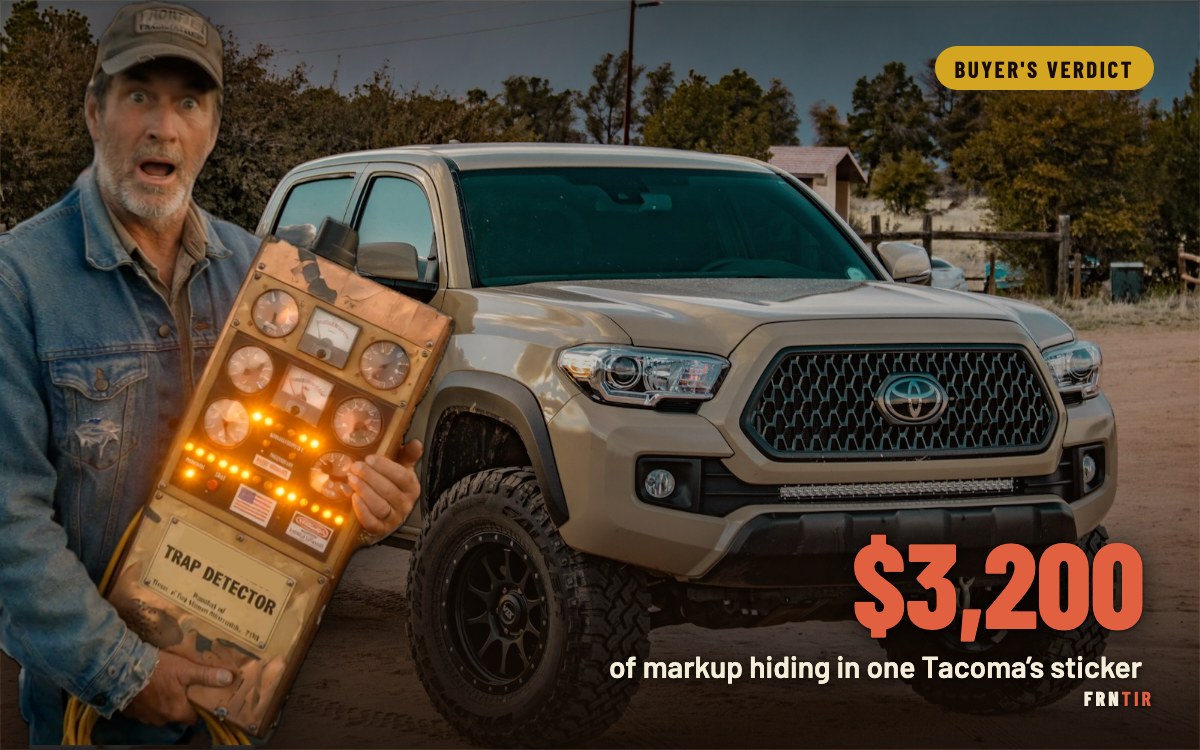
Is the Toyota Tacoma a Good Buy in 2026 — and What Should You Actually Pay?
It holds its value better than almost any truck — which is exactly why it’s one of the easiest to overpay on. Where the markup hides, the almost-new trap that hits it hardest, and the out-the-door zone to aim for before the addendum goes on.
A broker’s pitch works by making the whole job sound like one thing you can’t handle. So take the job apart: line by line, here’s every task a broker does — and which ones you can do yourself for free. Only one is worth paying for.
Hiring a broker isn’t always a waste — in a few narrow cases it’s money well spent. Here’s the honest split: when paying someone pays off, when it doesn’t, and the middle path that costs a fraction of a broker’s fee.

Three ways to buy a car, and every pitch swears it’s the one on your side. The honest way to sort them isn’t to weigh the promises — it’s to follow the money, and only one of the three checks has no one else to answer to.
A car broker charges one of three ways — a flat fee, a cut of the “savings” they get to define, or “free” because the dealer pays them. The honest teardown of what each really costs, and the fixed-fee alternative with no percentage and no dealer money.
A concierge who shops the car, negotiates the price, and charges you nothing sounds like a gift — but if it’s free to you, the dealer is paying. Follow the money to see whose side your “advocate” is really on.
A broker reliably beats an unprepared buyer — but roughly ties a prepared one. The real contest is broker vs. a prepared you, and the price gap is often smaller than the fee.
A car buying service does five visible, replicable things — pull comparable listings, set a target price, email dealers, negotiate, and hand off the car. Here’s each step, and who can do it.

Most car-buying services negotiate the price, then hand you back at the finance-office door — exactly where add-ons, rate markups, and padded fees drain the deal. Here’s the room ‘full service’ leaves you to handle alone.
Holdback, invoice, and dealer gross are already public. A broker’s real edge is a fair price for your exact VIN and the plays a given dealer runs — and both are buyable for $49 without hiring the broker.
Three blunt questions tell you whether a car broker is really independent or quietly dealer-paid: who pays you, do you take dealer money, and how is your ‘savings’ defined. If the answers are murky, here’s the shortcut.

Dread the dealership and freeze up when it’s time to negotiate? The fix isn’t nerve or a silver tongue — it’s walking in already knowing the fair price and the plays. Here’s how.
A fair price doesn’t take days — it takes about 90 minutes. Set your number, gather written out-the-door quotes by email, walk in and decline the extras. The whole timeline, step by step.
A membership program’s ‘pre-negotiated’ car price is a ceiling the dealer agreed to accept for the lead — not the floor. Here’s how the model works and why a prepared buyer routinely beats it.
Bring the friend for support and a skeptical second set of eyes — but a buddy’s gut sense of ‘a good deal’ isn’t a fair-price number for this exact car in today’s market. Here’s how to get both.
You buy a car every five to eight years, not every month. A recurring car-buying subscription charges you continuously for an occasional need — a one-time $49 report matches the real cadence. Here’s the math.
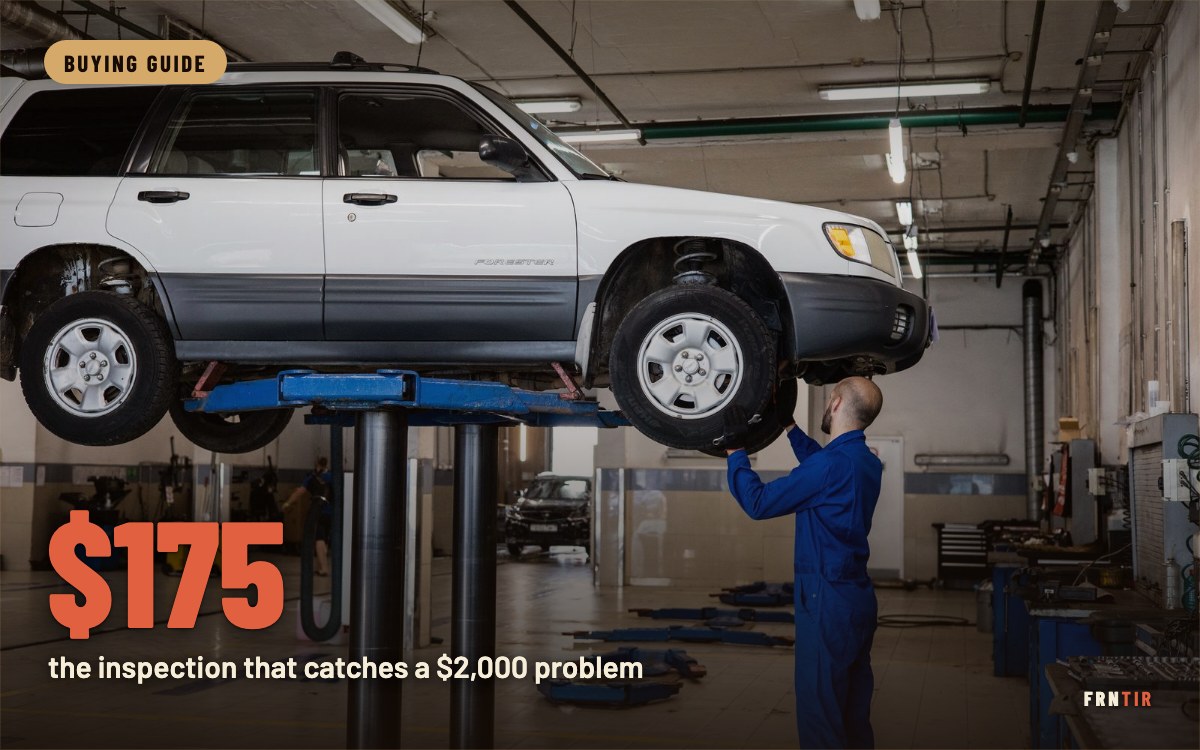
The $150–$200 step most buyers skip — and the best guard against buying someone else’s problem. The seven-part checklist for any mechanic, what’s a flat dealbreaker, and the $175 inspection that saved $2,000.

“Let me check with my manager” means twenty minutes of engineered waiting — and almost none of it is negotiation. A minute-by-minute look behind the door: who really holds the pen, why the clock runs on purpose, the T.O. that walks back in, and how to take your patience back.
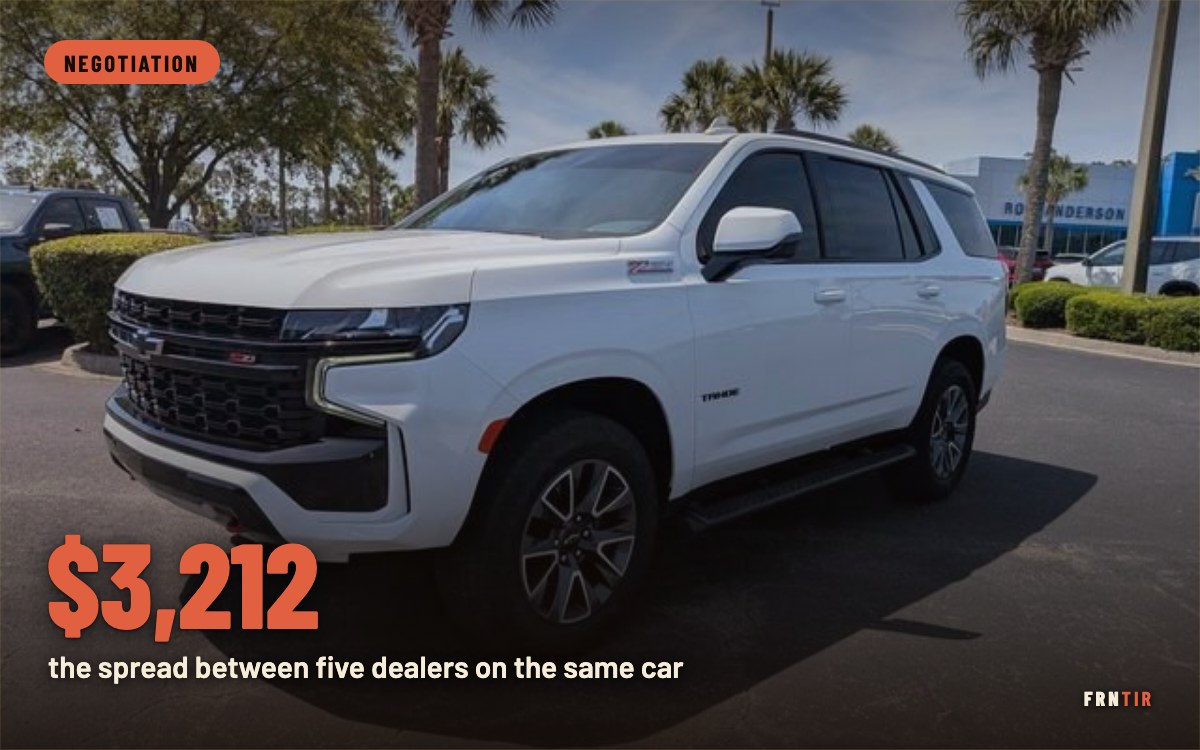
The showroom is the dealer’s home turf. Email flips it — three to five written out-the-door quotes, side by side, before you ever walk in. Who to write, the copy-paste template, and why the lowest sticker so often hides the highest total.
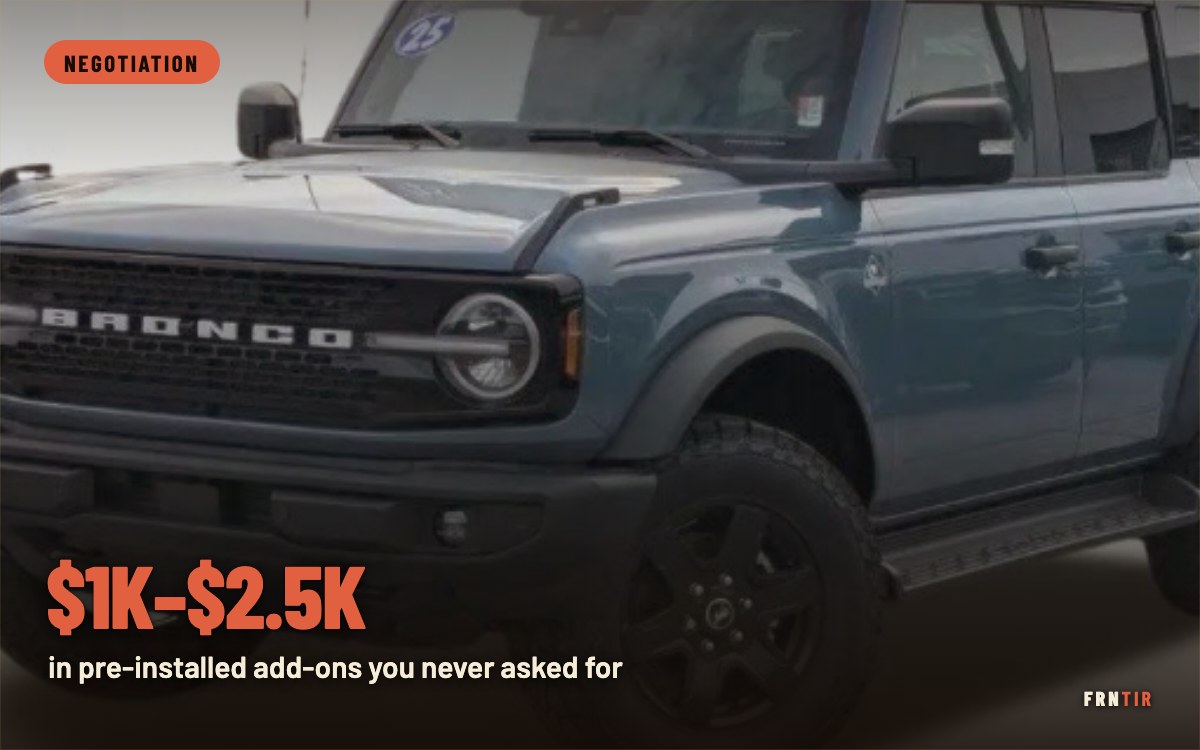
They’re bolted on before you reach the lot, then billed as non-negotiable. They’re not. What each one really costs the dealer versus what you’re charged, why the FTC just put 97 dealer groups on notice, and the script to get them off your bill.
A clipboard, a pen, and a sheet split into four boxes — price, trade, down, payment. It looks like organization; it’s a device for shuffling money between boxes while your eyes stay on the monthly payment. How the trick works, $2,000 traced across the boxes, and the four moves that take it apart.
Every app and chatbot now claims to help you buy a car. Five questions tell you in 30 seconds whether a tool is working for you or for whoever pays it — and the most important one is the last thing most people think to ask.
AI car-buying advisors are everywhere, and most just wrap a book-value range in a chatbot. What AI is genuinely good at when you’re buying a car, the one thing it can’t do for your exact VIN, and the question almost nobody thinks to ask it.
“Pay invoice and you’ve won” was never quite true. Invoice isn’t what the dealer paid — it’s the wholesale figure before holdback and incentives come right back. What invoice really means, the cost-stack on a $40,000 car, and how to verify the number you’re handed.
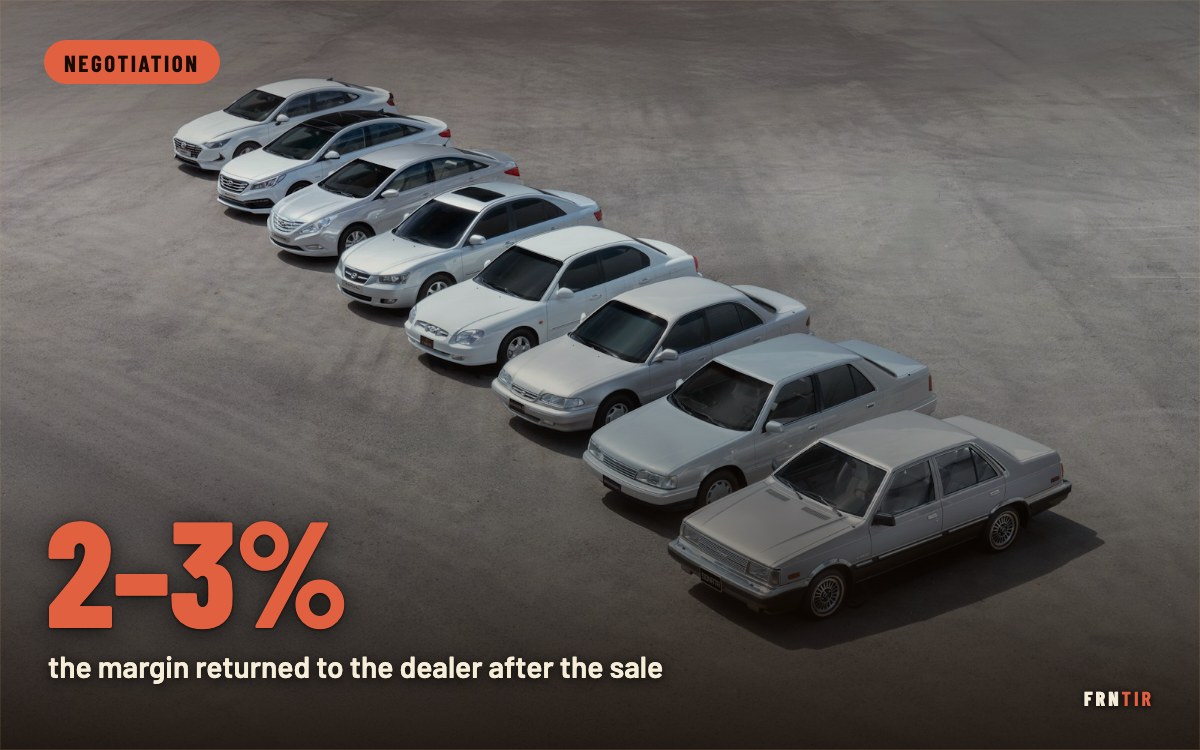
The salesperson slides the invoice across the desk and says they’re losing money — they’re not. Holdback is 2-3% the manufacturer pays the dealer back after the sale. What it is, the holdback by brand, and why invoice was never the floor.
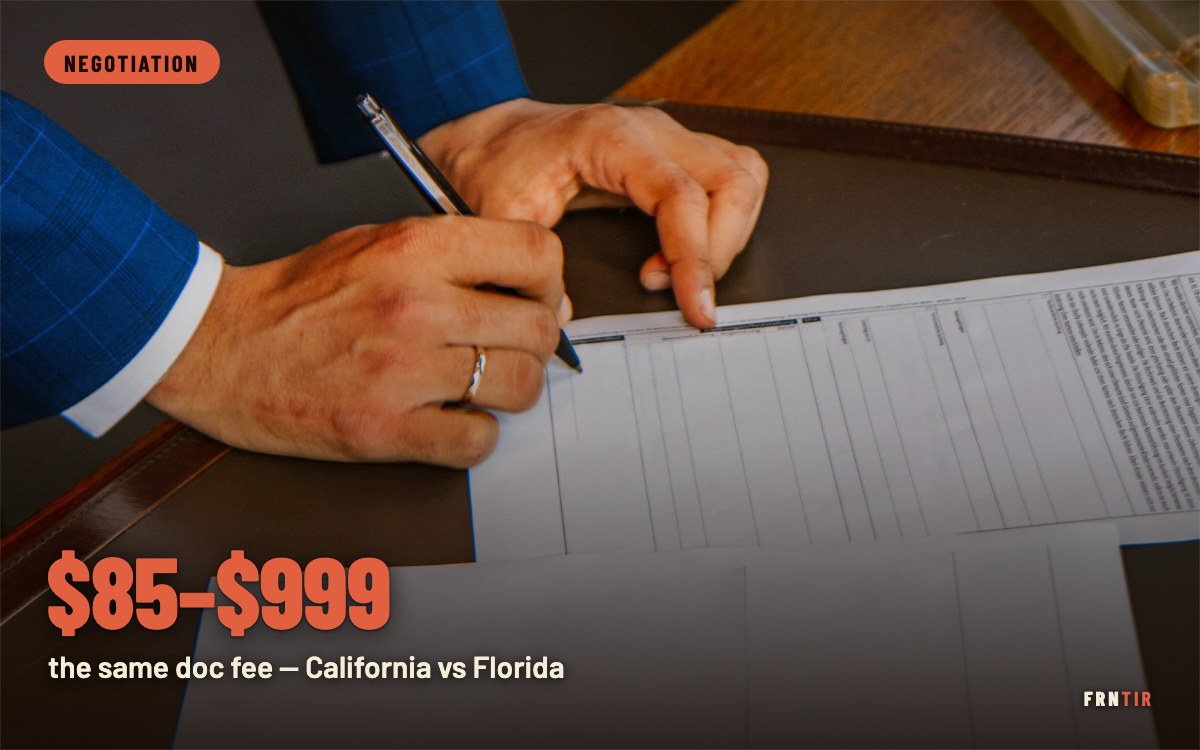
The doc fee is the one line on a car contract that’s almost pure dealer profit dressed up as paperwork — and what you can be charged depends entirely on your state. A 50-state reference, what it really covers, and how to handle it at signing.
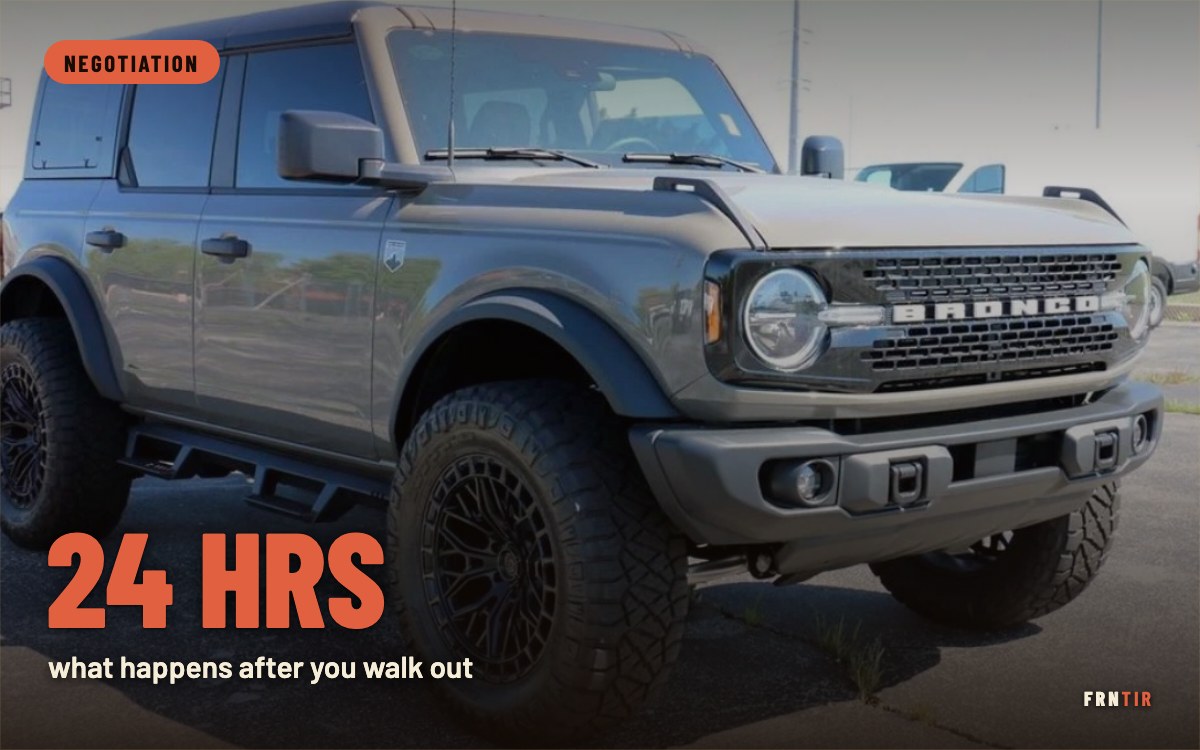
The strongest leverage a buyer has is the willingness to leave — and almost nobody uses it. The psychology, what really happens in the 24 hours after you walk, and how to do it without losing the car.

The finance office is the dealer’s second negotiation. Six F&I products that cost 3-5x more than the alternative — the markup math, the script, and the right way to say no.
Hot used models — Tacoma, 4Runner, Bronco, Pilot, Lexus CPO — increasingly cost the same as or more than new once you account for incentives. The four mechanisms, how to spot it, and the math worth running on the specific VIN.
Monthly payment is a decoy. Sale price is half the story. Out-the-door is the only honest number. The math, the fees, and how to anchor every conversation on the total cost.
Choosing 0% APR over a cash rebate can cost you $1,000–$3,000. The math, the captive-lender game, and the four questions to ask before signing.
Private sellers typically save you $1,500–$3,000. Dealers give you a safety net. The real tradeoffs of each path, what to verify, and how to negotiate either.
The 2026 playbook. What to know before you walk in, what to say at each phase of the deal, and how to spot the math dealers don’t want you to see.